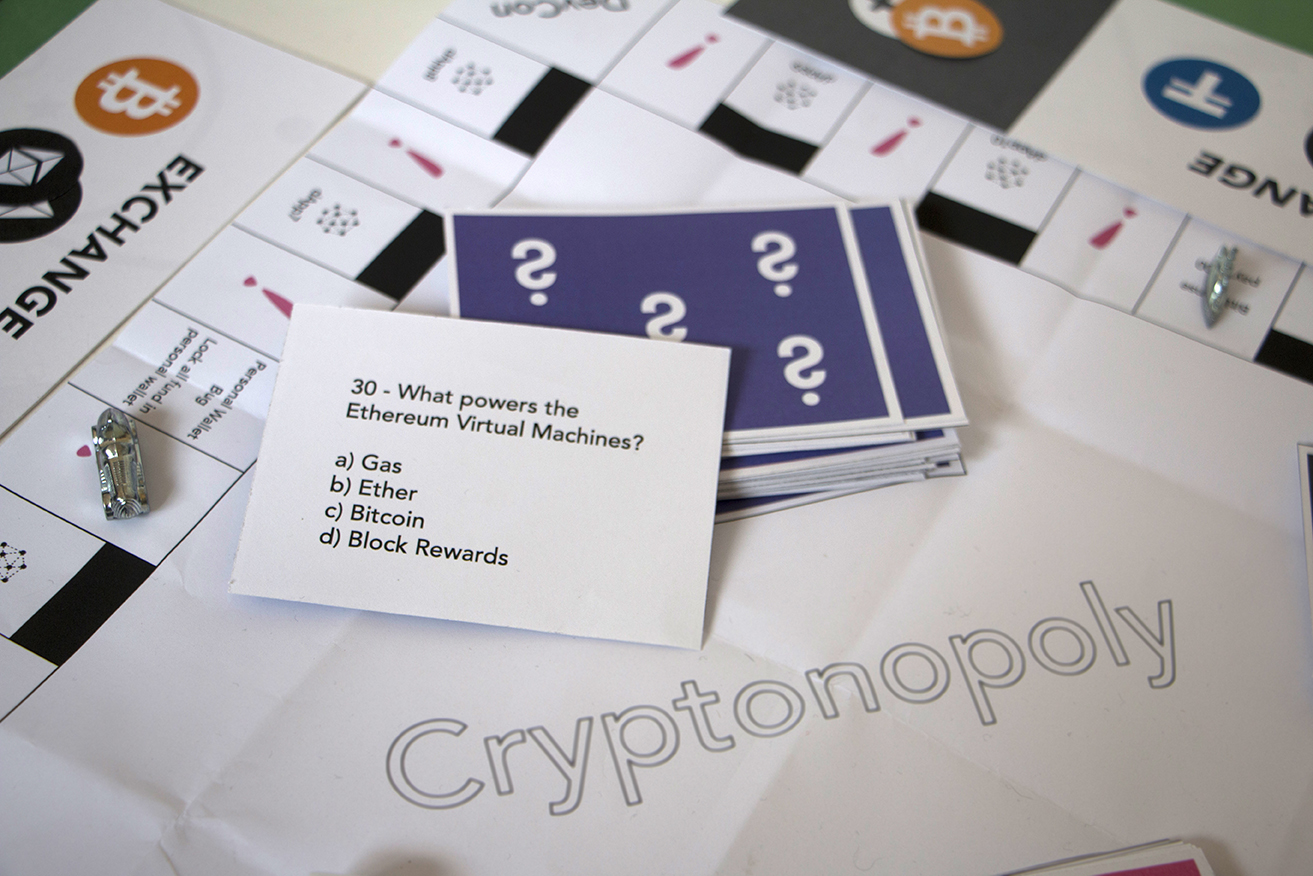
Cryptonopoly 🎩
Multiplayer Cryptocurrency Game
Abstract
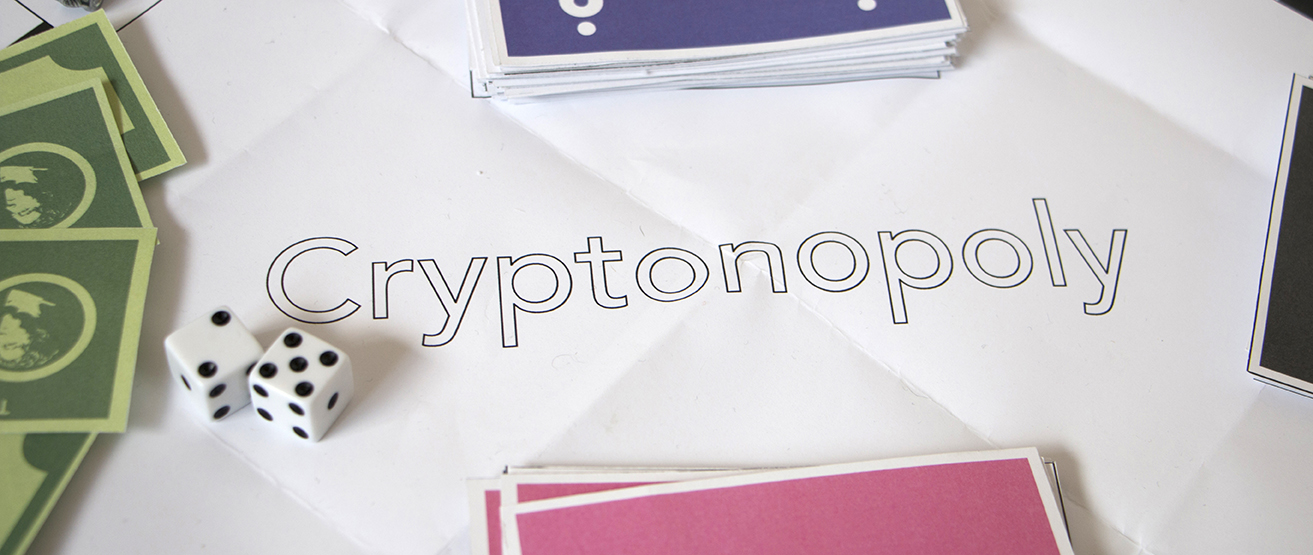
Cryptonopoly is a four-player board game that introduces blockchain to the general public. It explores the subject's technical details, contrasts blockchains with centralized systems, and creates a simulation in which players can experience the opportunities and responsibilities of participating in a blockchain ecosystem.
Components
Board
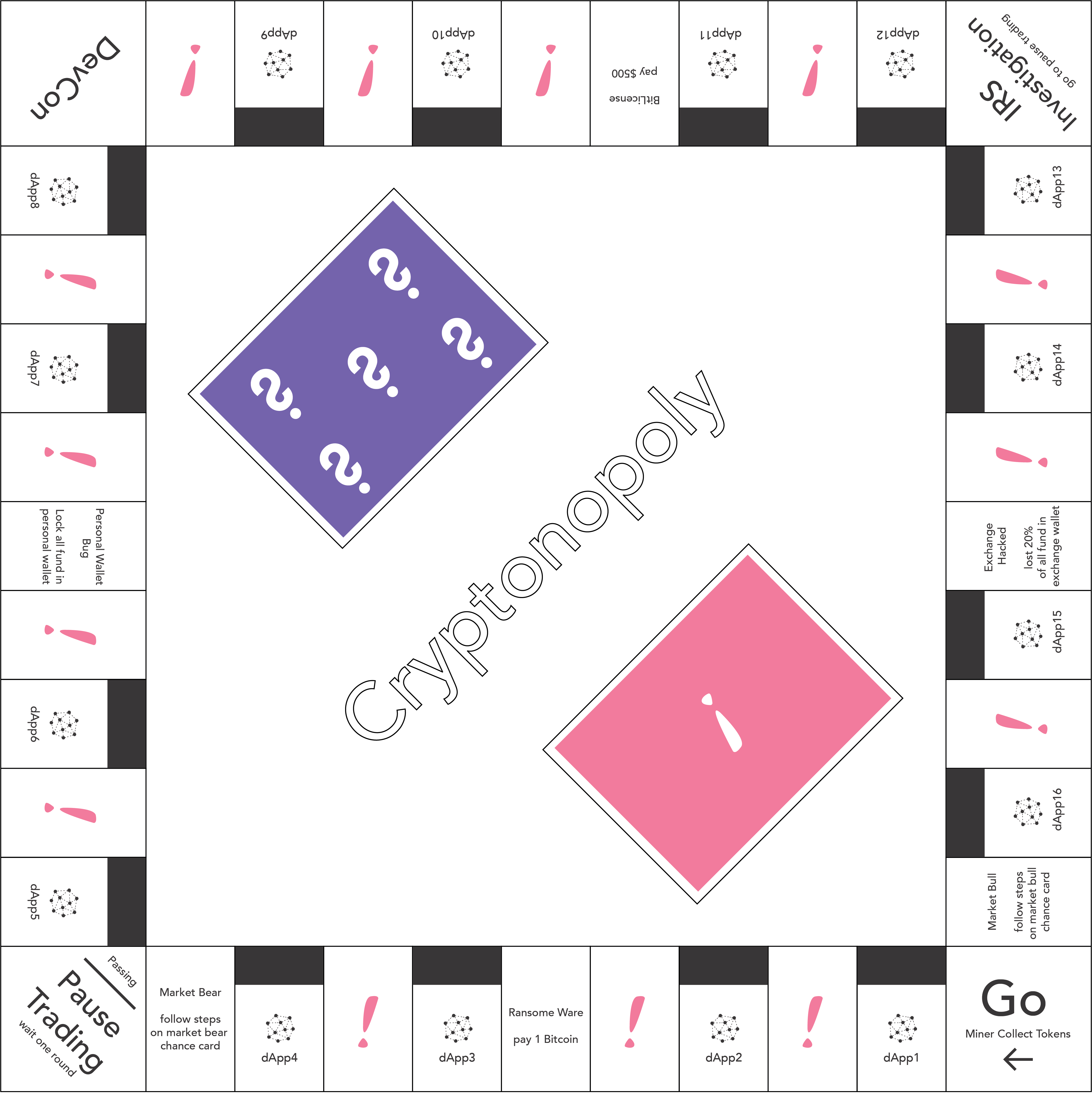
The Cryptonopoly board is similar to a Monopoly board. Players start on Go, take turns rolling the dice, and move around the board. Each player performs an action based on the space where they land.
Fiat Currency (Dollar)
Front | Back
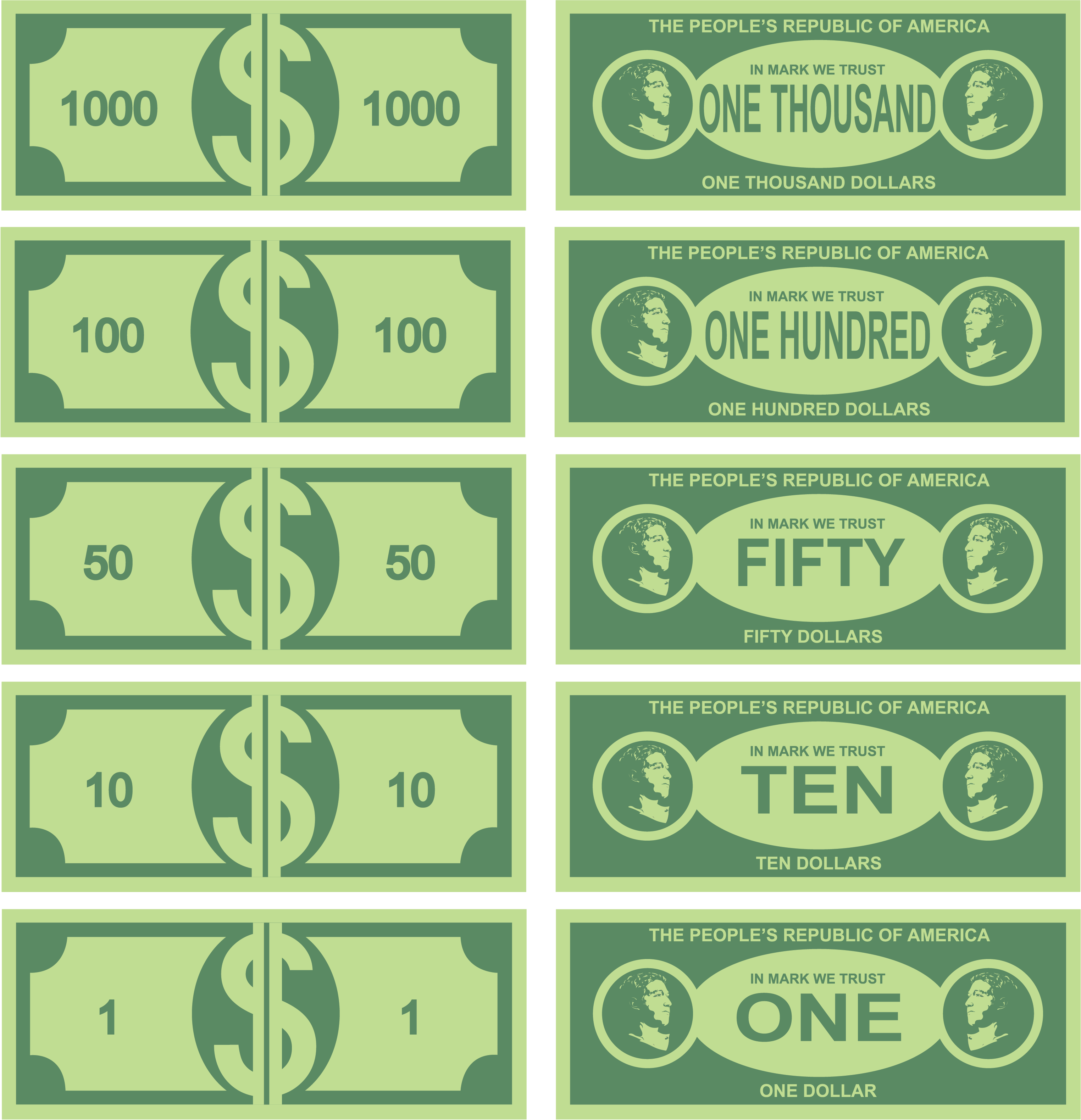
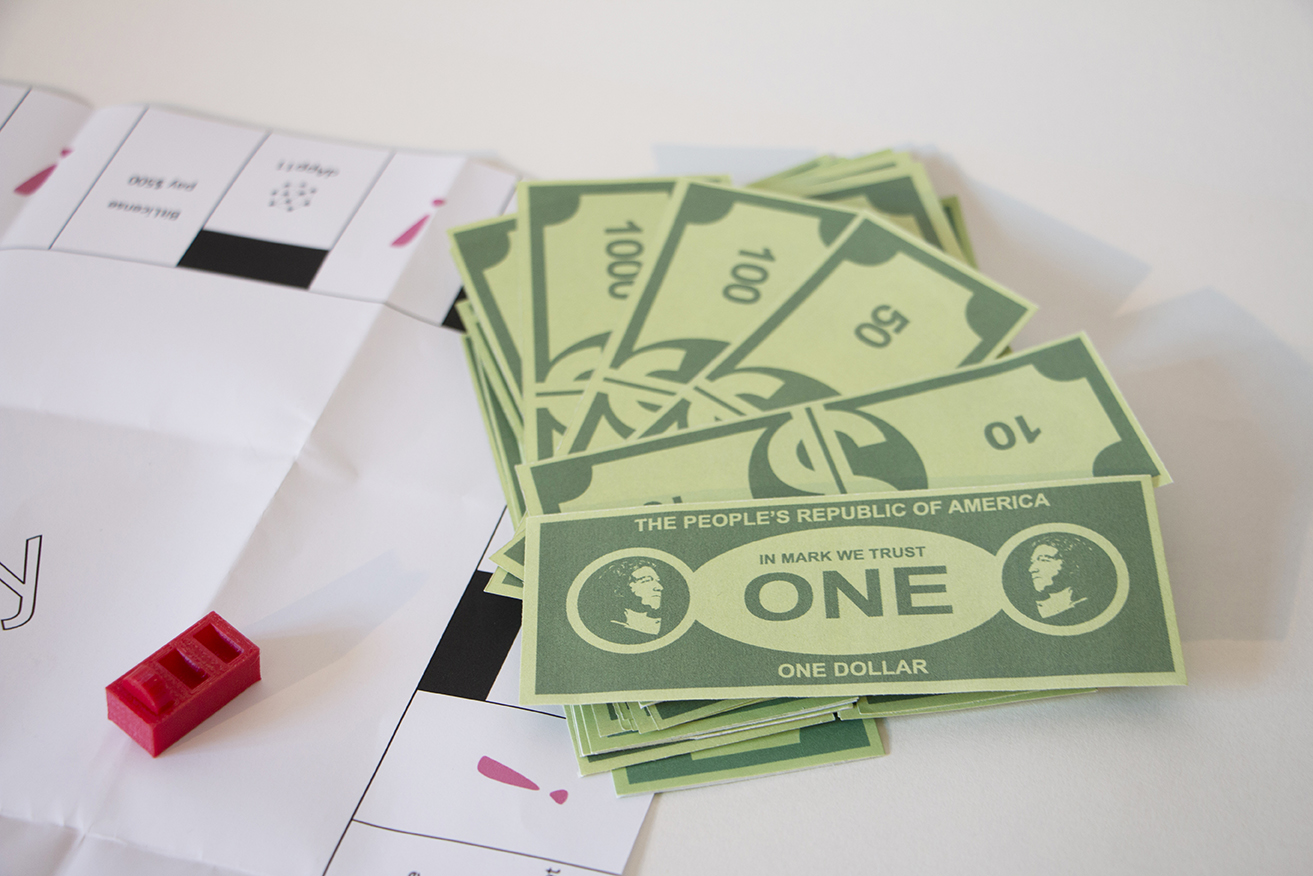
Fiat currency, called Dollars in the game, is Cryptonopoly’s primary unit of value. Players need Dollars to purchase cryptocurrencies and miners and to pay certain bills. A player’s total assets are also valued in Dollars.
Each player starts with 5,000 Dollars, broken down as follows:
4 × 1,000-Dollar bills
7 × 100-Dollar bills
5 × 50-Dollar bills
5 × 10-Dollar bills
Cryptocurrencies
Bitcoin - Front | Back

Ethereum - Front | Back
Token - Front | Back
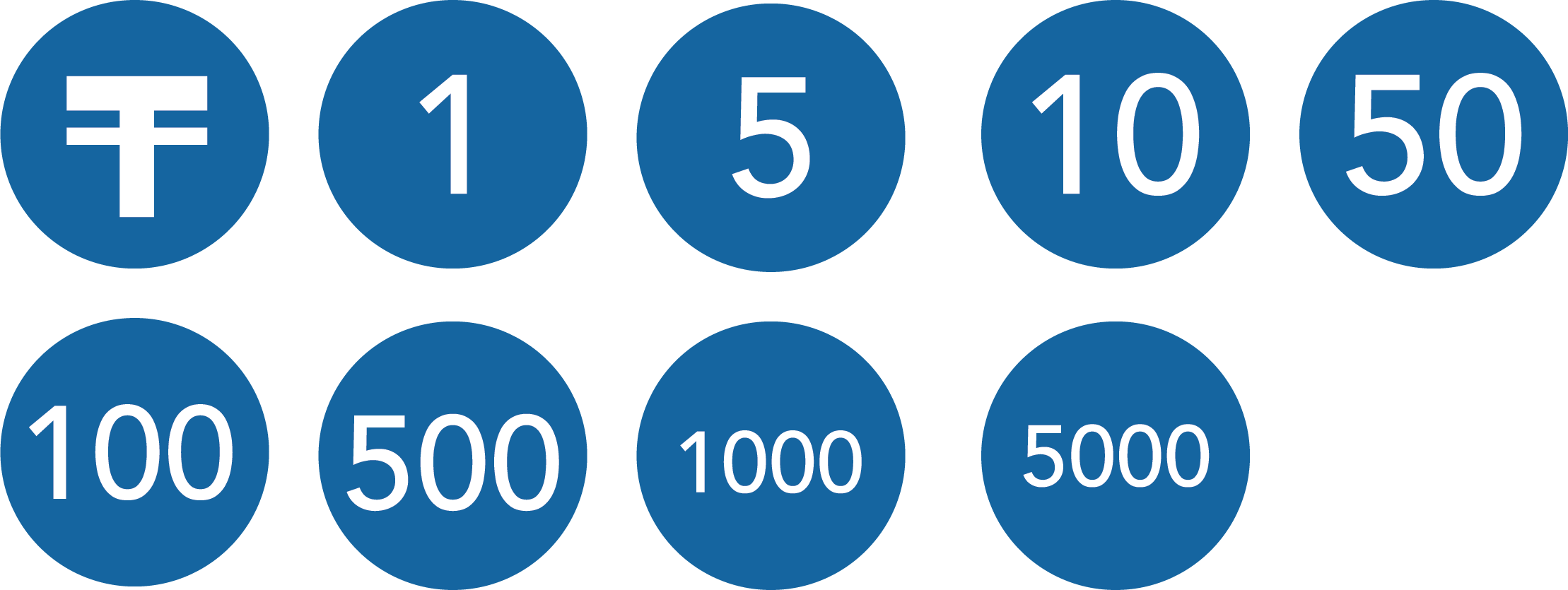
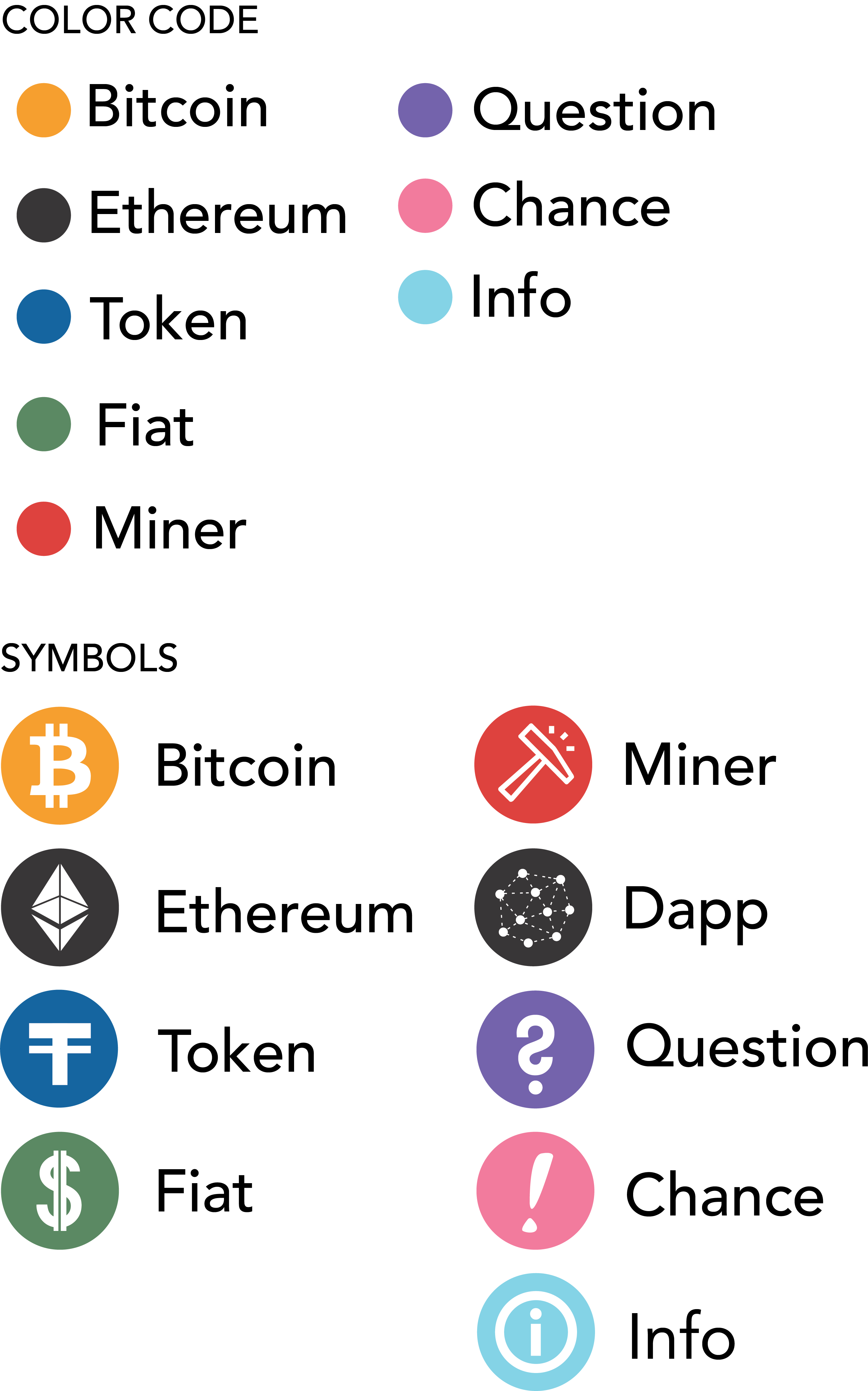
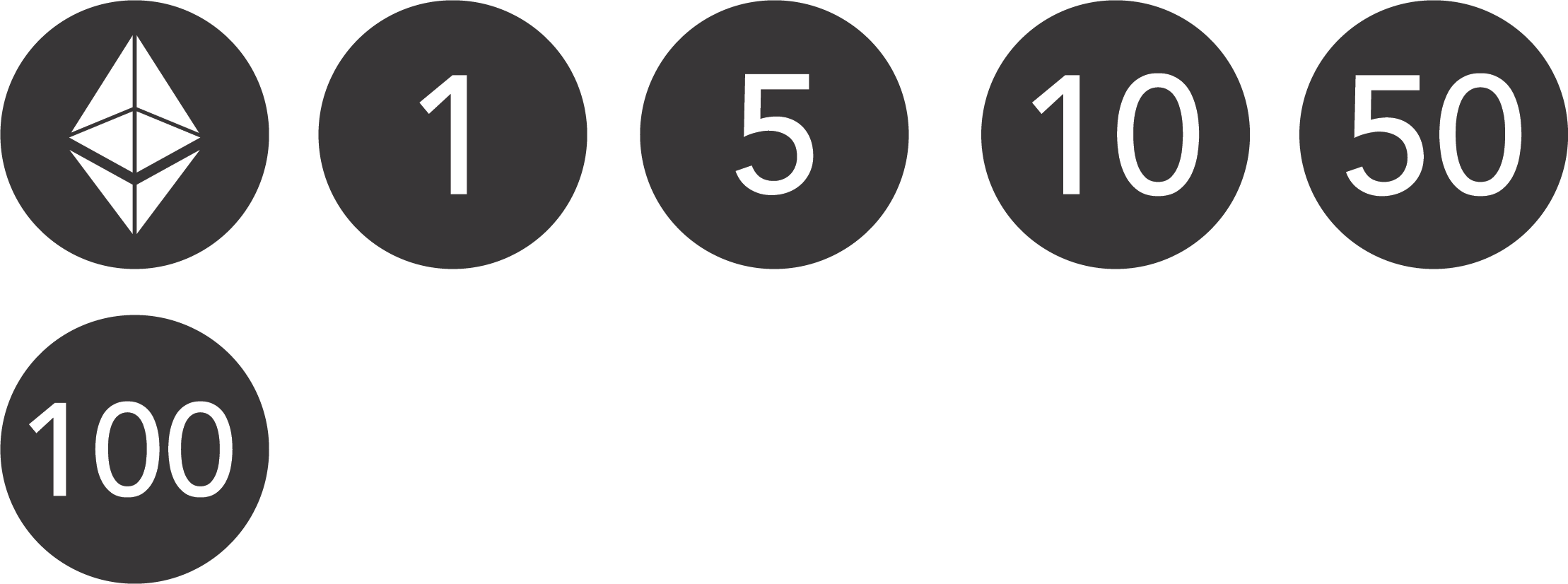
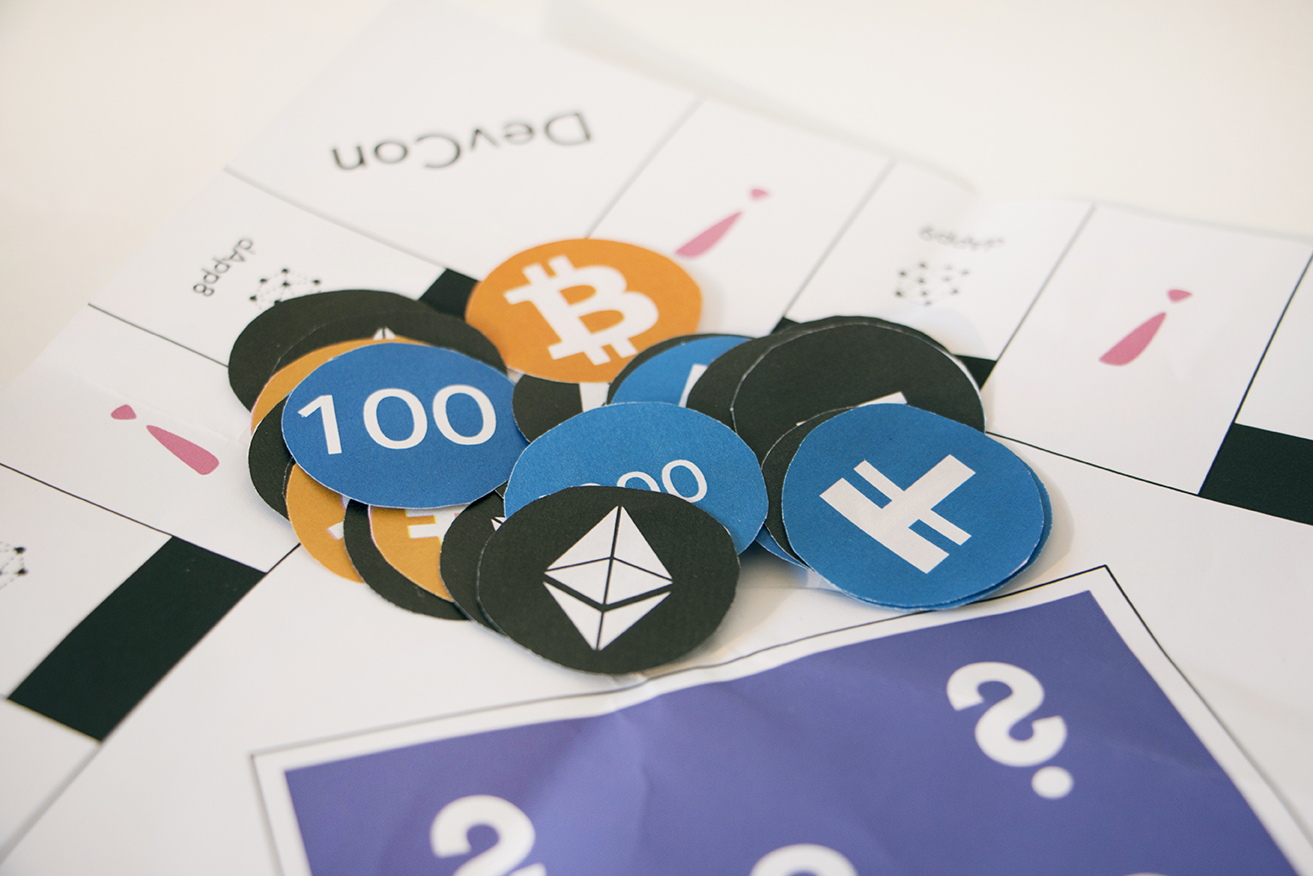
Cryptonopoly has three cryptocurrencies: Bitcoin, Ethereum, and a fictional currency called Token. Players buy and trade Bitcoin and Ethereum, and some game items are valued according to their prices. Players can mine Token and receive a reward each round based on the number of miners they own and the remaining life of each miner. Every cryptocurrency has a Dollar value that begins at the initial rate and changes throughout the game.
Initial cryptocurrency values in Dollars:
One Bitcoin = 1,000 Dollars
One Ethereum = 100 Dollars
One Token = 20 Dollars
Exchange rates between cryptocurrencies (these ratios do not change during the game):
One Bitcoin = Ten Ethereums
One Ethereum = Five Tokens
One Bitcoin = Fifty Tokens
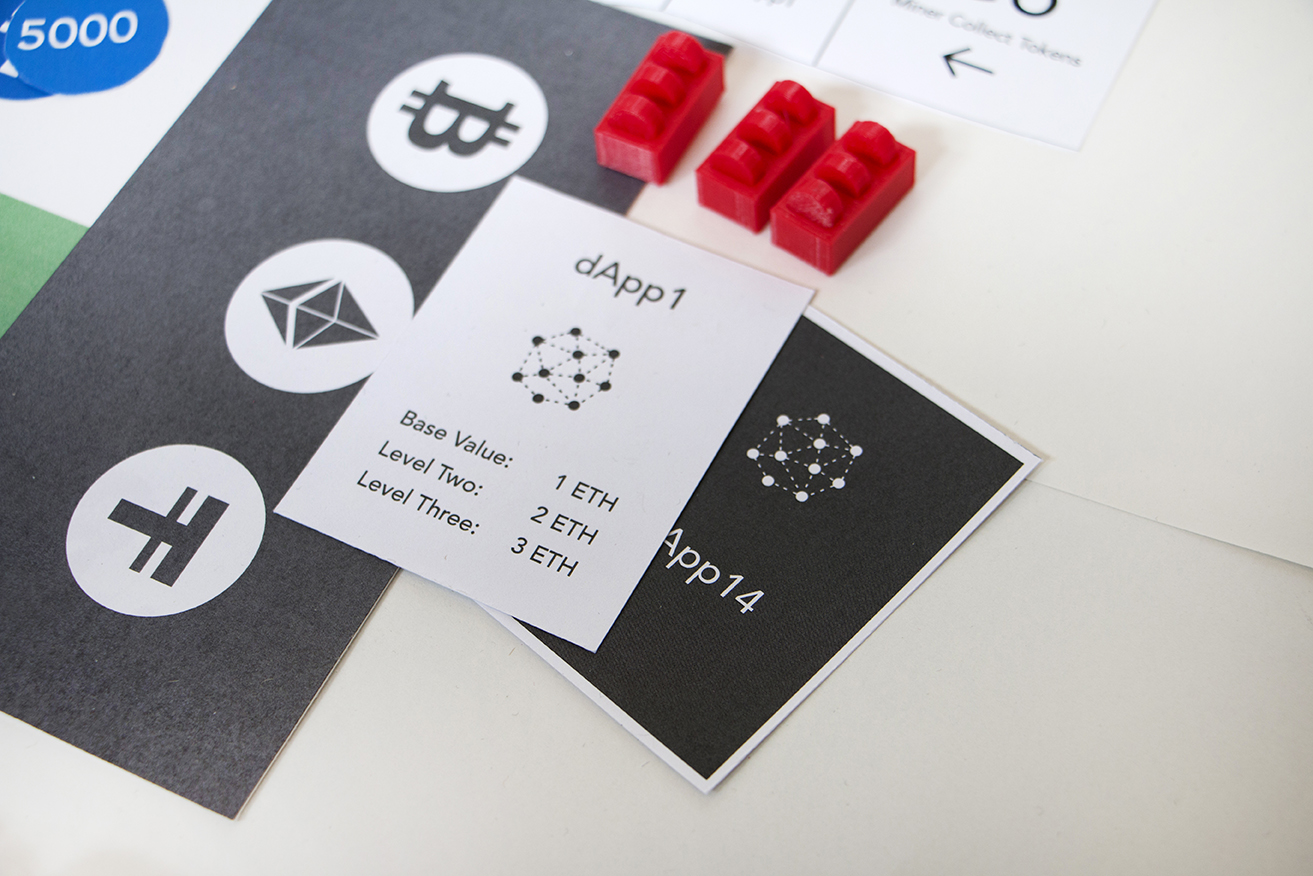
dApp
Front | Back
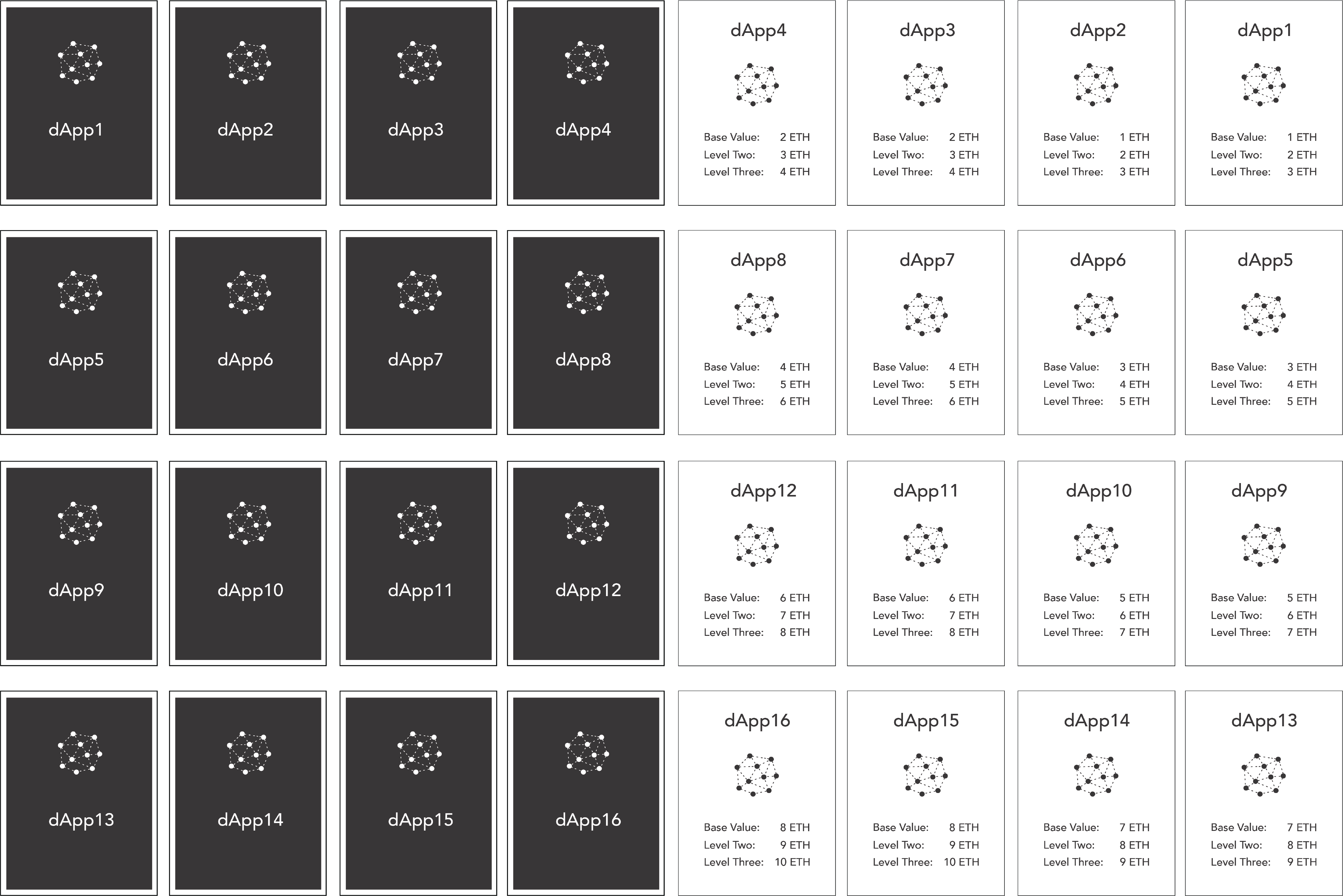
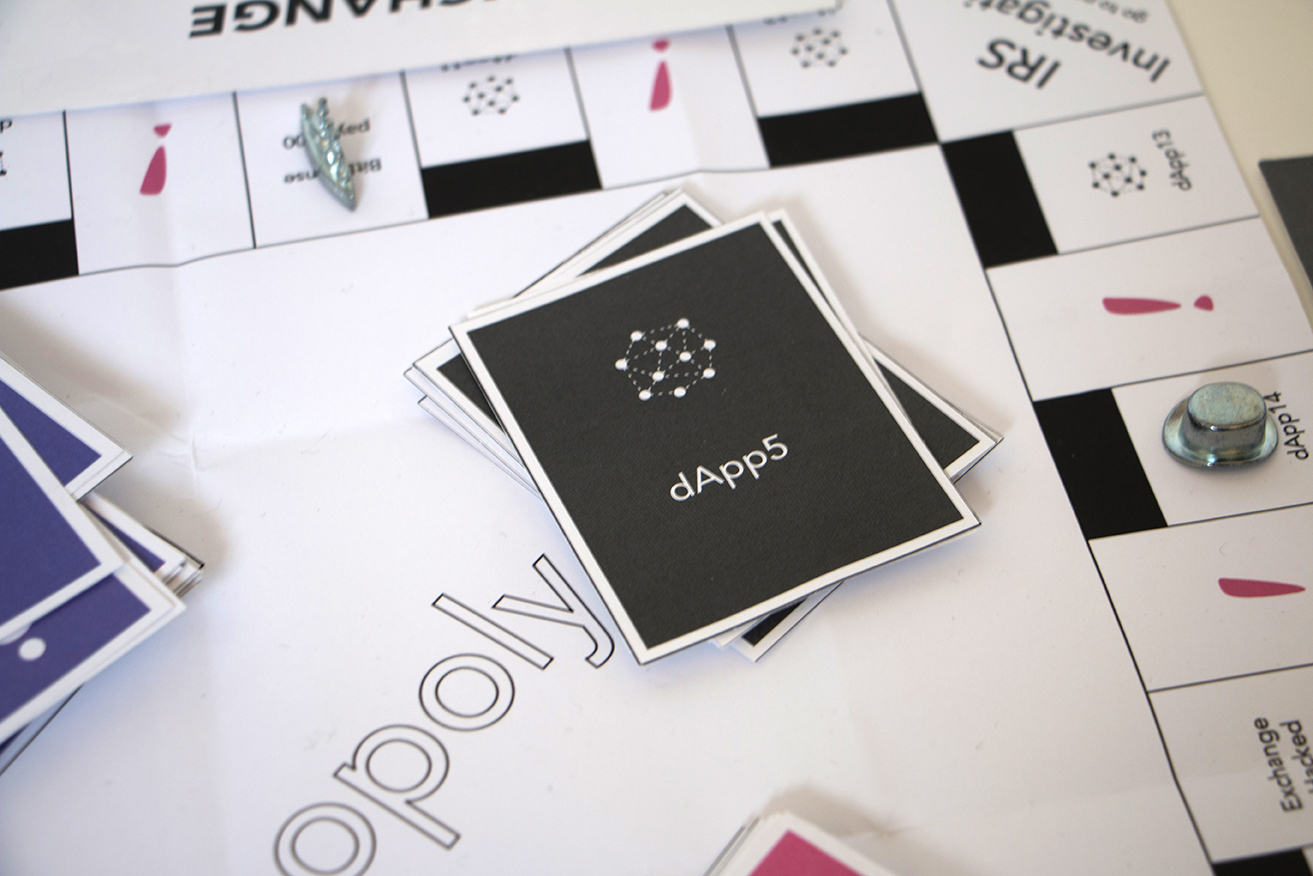
dApp cards are Cryptonopoly’s property cards, similar to property deeds in Monopoly. Their values follow the price of Ethereum, and players can buy an unclaimed dApp with Ethereum after landing on it. Before purchasing, the player draws two question cards and must answer at least one correctly. A player can upgrade a dApp by landing on it again and passing the same challenge. Each dApp can be upgraded twice. Other players pay Ethereum when they land on an owned dApp. If it is level two or higher, they can draw one question card and answer correctly to pay only the dApp’s base rate. These cards are based on decentralized applications that developers build on the real Ethereum network.
See this guide to dApps for more information about their real-world counterparts.
Miner
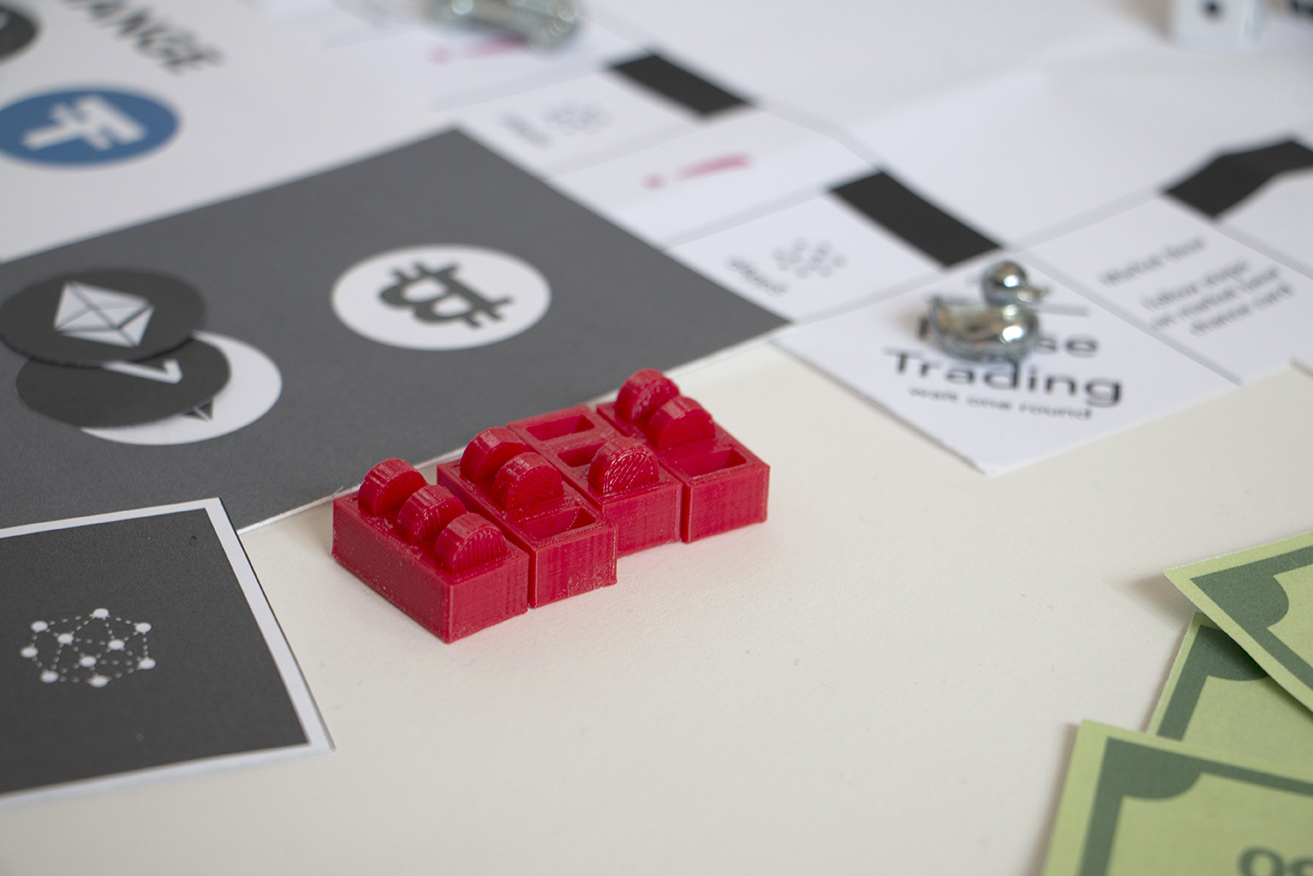
A Miner is a machine that produces Token. Players can purchase Miners at the beginning of the game or immediately after passing Go. Each Miner costs 200 Dollars and starts with three lives. Every time its owner passes Go, each Miner loses one life. Once a Miner runs out of lives, it stops producing rewards. The Token reward depends on how many lives remain across the player’s Miners.
Here is a simple formula for Token rewards based on a Miner’s remaining lives:
Three Lives = 100 Tokens
Two Lives = 50 Tokens
One Life = 25 Tokens
Chance Card

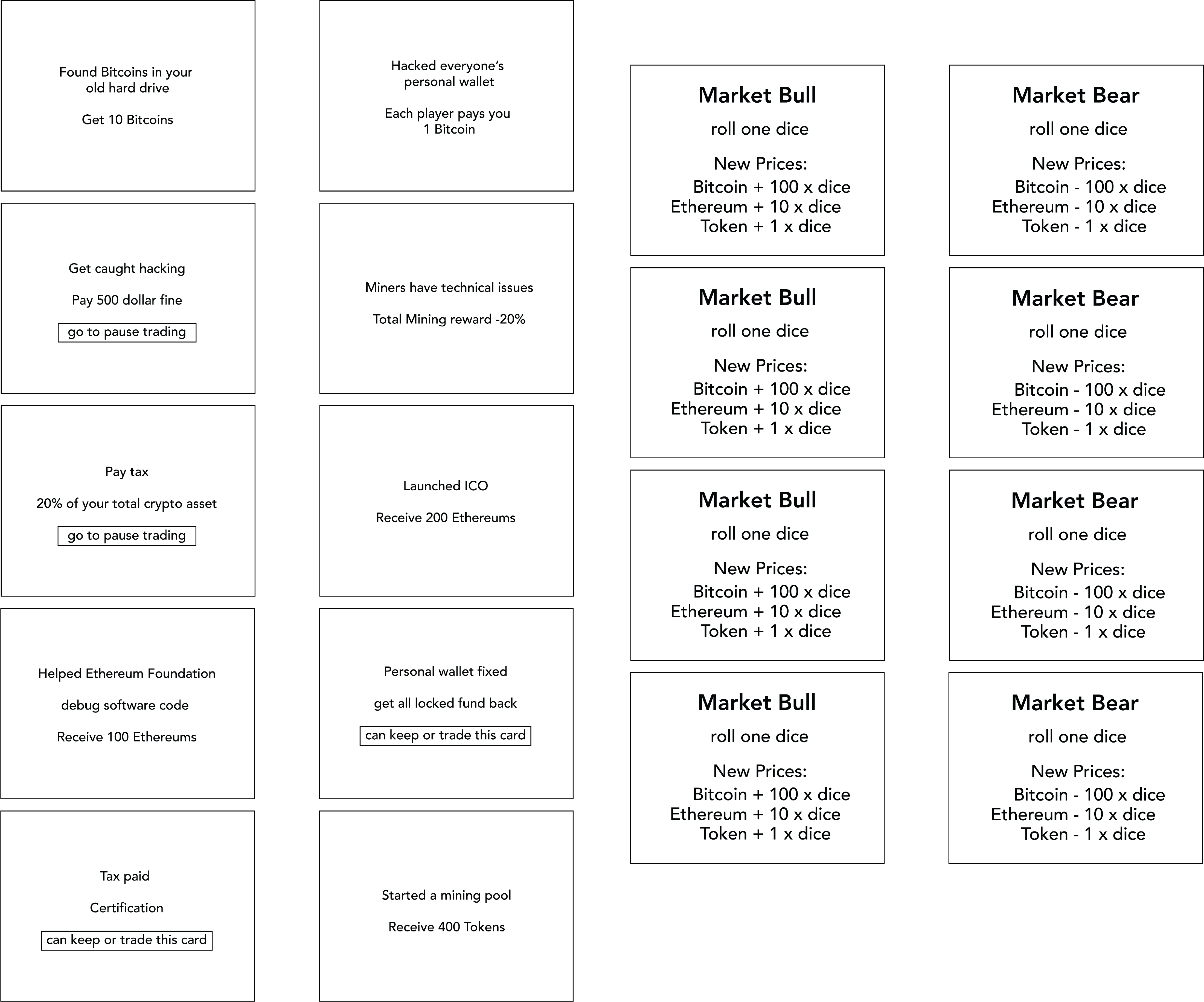
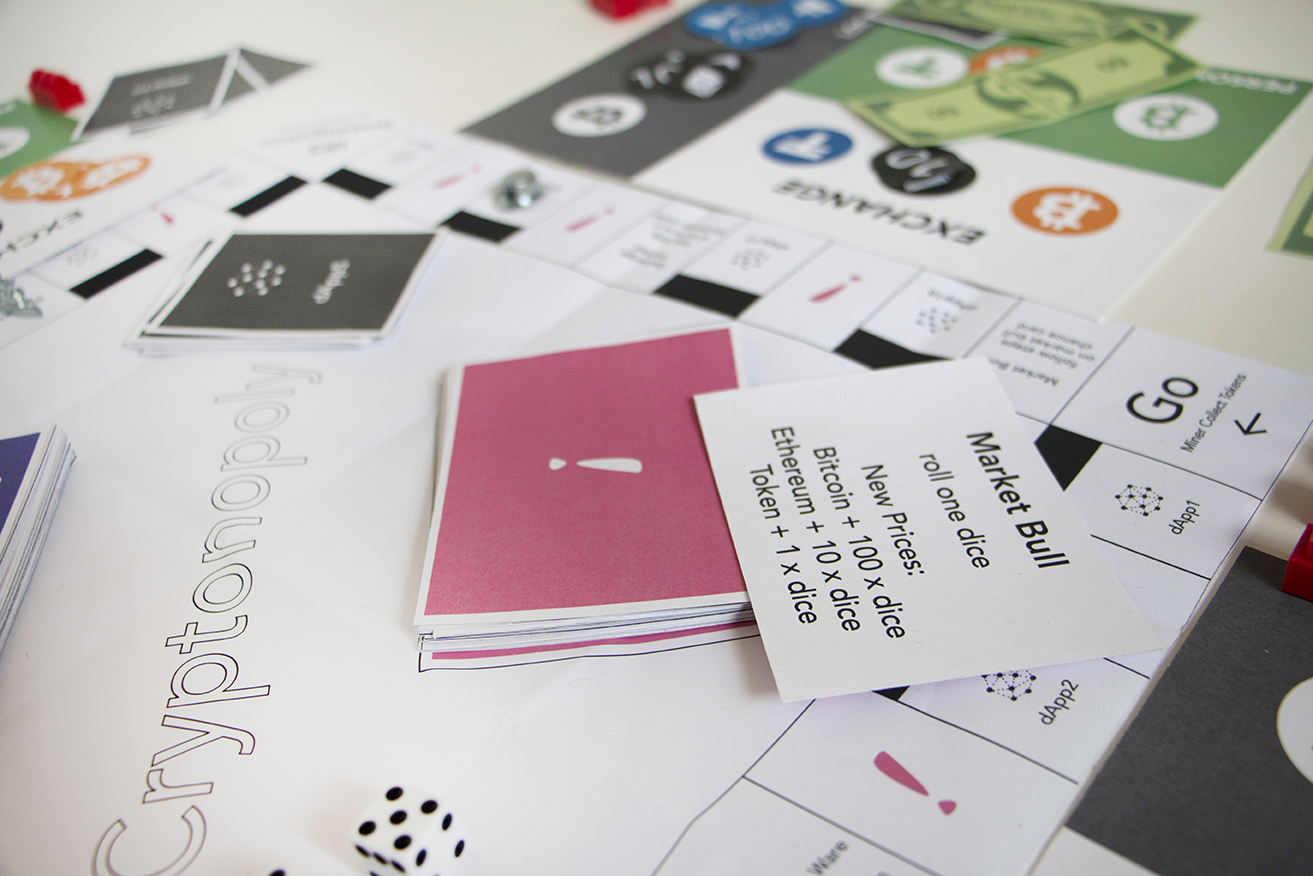
Chance cards are similar to those in Monopoly: a deck of positive and negative events. A player draws one after landing on a Chance space. The deck includes two special cards, Market Bull and Market Bear, that affect cryptocurrency prices across the entire game and therefore change every player’s holdings. There are 18 Chance cards so far, and I will add more in the future if I have time.
Question Card


Question cards contain blockchain trivia that players must answer correctly to purchase a dApp or reduce a payment. The deck spreads the difficulty evenly across multiple-choice and true-or-false questions, so players always have a chance to guess. It currently contains 40 questions.
The files below contain the full list of questions and answers:
Blockchain Trivia Questions
Info Card

After every dice roll, the player’s first move is to draw an Info card. Each card teaches a blockchain concept that also appears as a trivia question in the Question deck. Over time, players can learn every trivia answer from the Info deck.
The file below contains the complete Info deck:
Info List
User Dashboard
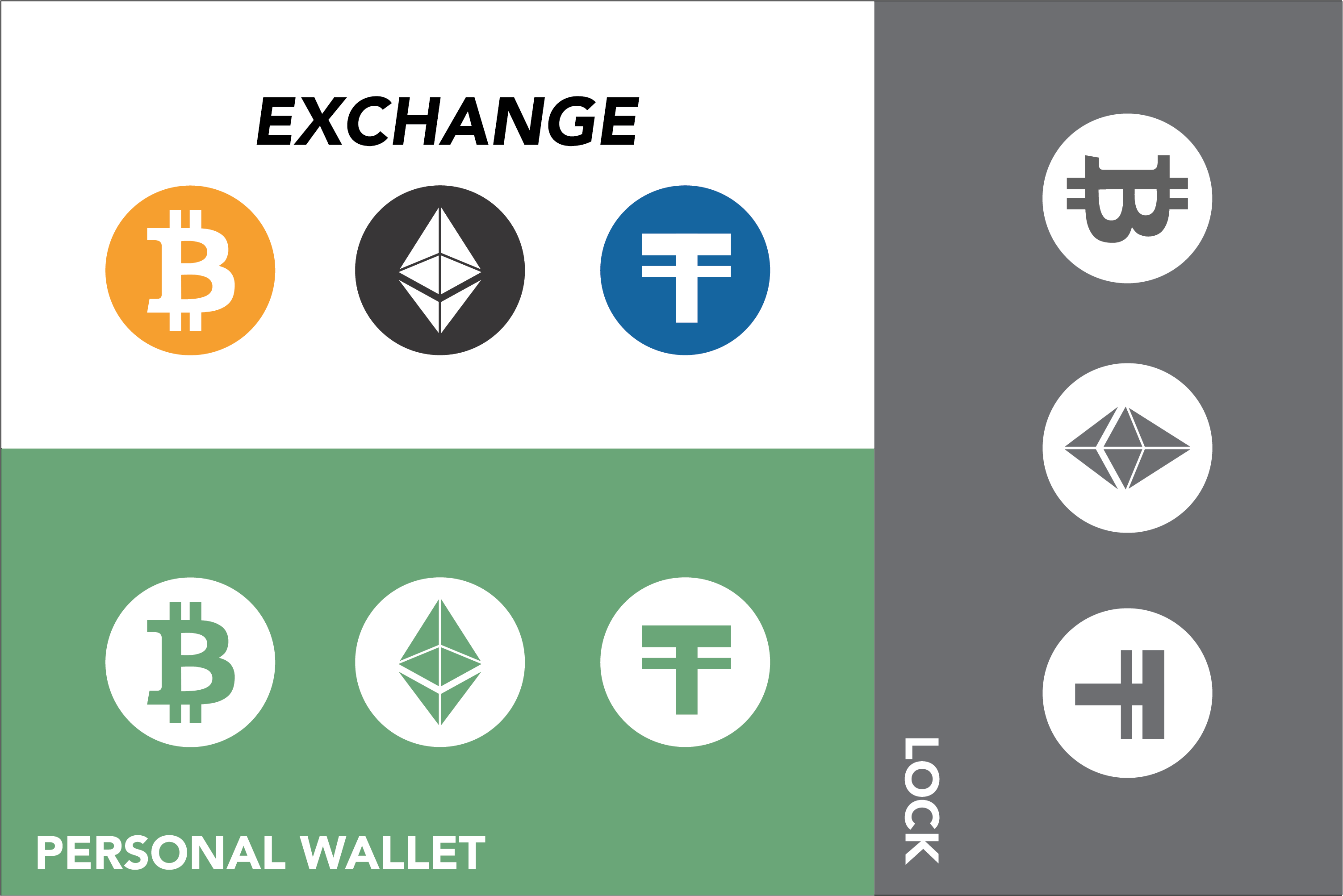
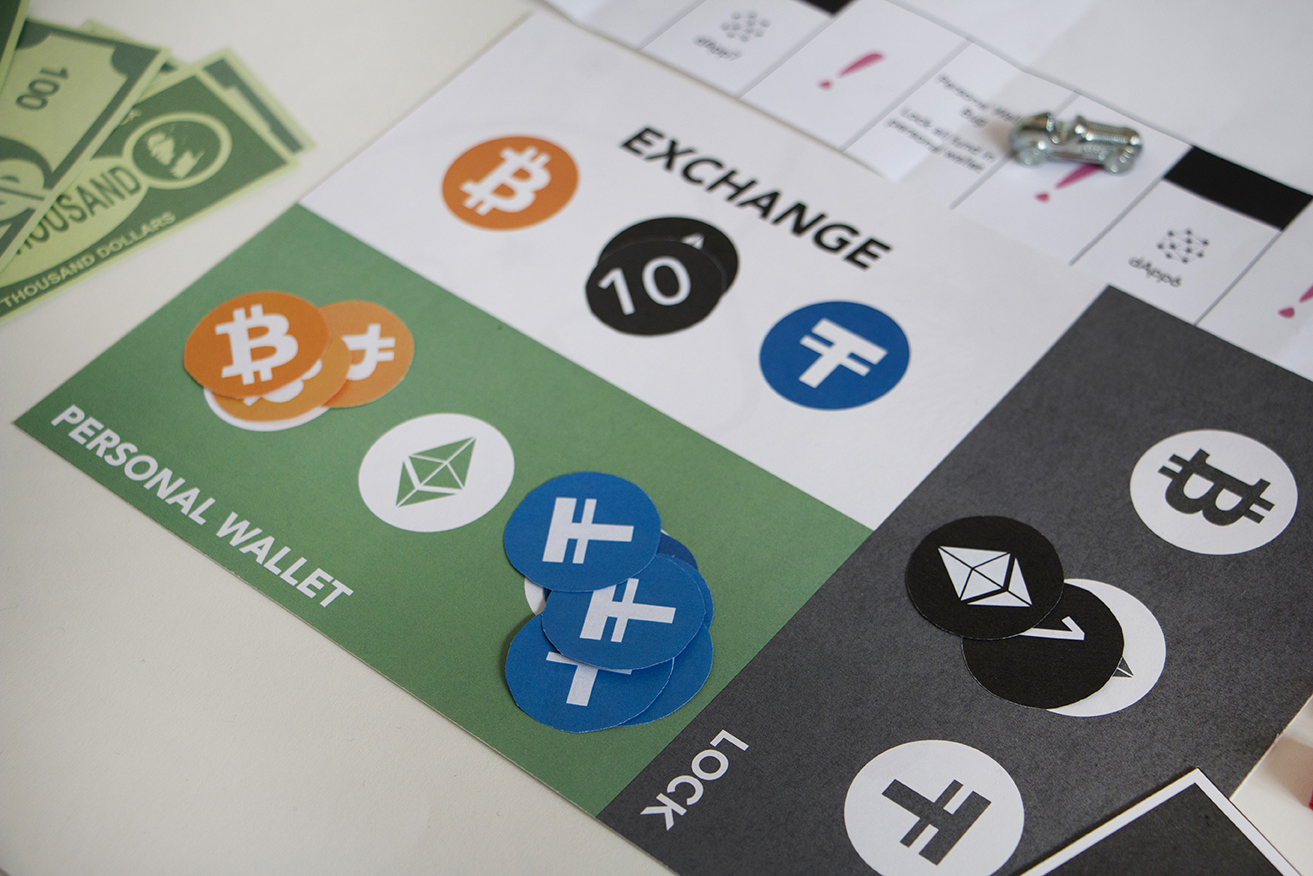
Each player receives a dashboard for managing cryptocurrencies. It has three sections: Exchange, Personal Wallet, and Lock. The Exchange stores currencies purchased with Dollars, and players can move funds between it and the Personal Wallet once per round. Both sections can be hacked or frozen. When that happens, their funds move into Lock and cannot be used until they are unlocked. Token rewards from Miners go directly to the Personal Wallet. Players can choose whether Ethereum payments from dApps and other sources go to the Personal Wallet or the Exchange.
Printed Prototype
Board Setup
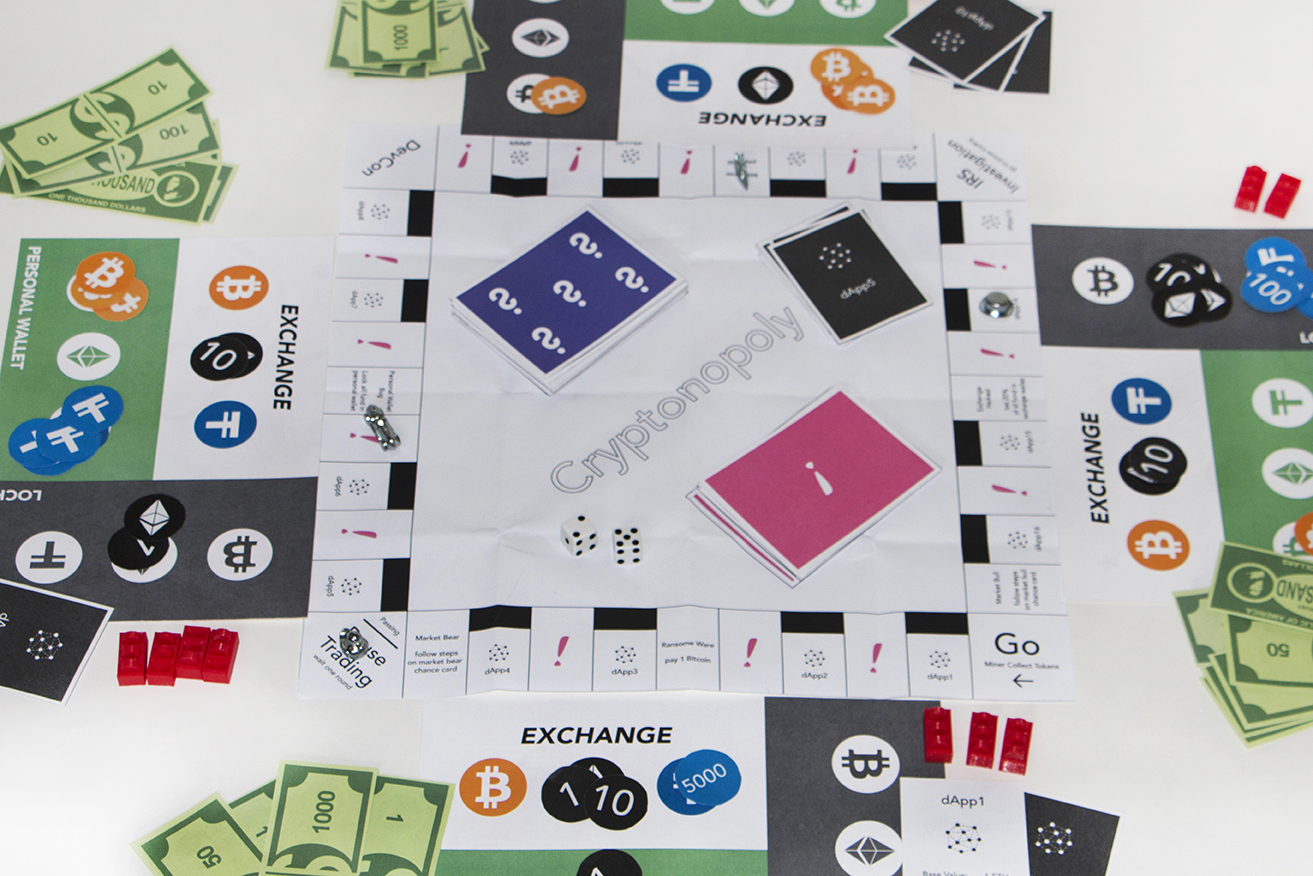
User Dashboard with coins
Fiat Currency
dApp Cards
Cryptocurrencies
Miner Machines with Miner Lives
Chance Card
Question Card